






EDUCATION AND RESEARCH CENTER OF LEGAL MEDICINE,
CHIBA UNIVERSITY
ANNUAL REPORT 2024
Preface
At the Education and Research Center of Legal Medicine (Chiba University), we perform autopsies and various tests on deceased individuals, mainly from Chiba Prefecture, when law enforcement agencies identify the need for forensic investigation. Our objective is to determine the cause of death from a medical perspective. We perform DNA analyses and dental examinations for the purpose of body identification, furthermore, we receive requests for forensic diagnoses from child consultation centers, prosecution teams, and prefectural police regarding living individuals.
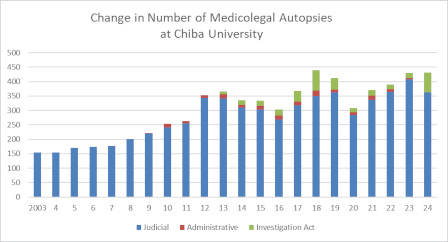
In 2024, the total number of autopsies conducted was 421, marking an increase of 1 compared to the autopsies performed at Chiba University in 2023. Compared to the previous year, there was a significant decrease in judicial autopsies (408 to 361), while there was an almost equal increase in autopsies performed in compliance with the Investigation Act (investigative autopsies) (17 to 70).
Based on the Basic Act for the Promotion of Death Investigation which came into effect in April 2020, the Plan for Promoting Investigation into Causes of Death was approved by the Cabinet in 2021, and was further revised three years later in 2024. However, most of this plan was a continuation of the previous plan, and apart from minor changes in wording, there was only one new plan item. Furthermore, there are no new projects that require budgetary measures, and it must be said that discussions on system reform are stagnating.
Notably, we not only collect relevant information on dead people, determine the exact cause of death of each individual, and identify bodies, but also determine the death trends in Japan and help prevent accidents and disasters as well as the recurrence of murders and suicides. Our social mission is to maintain and improve the safety and health of the population. Given this context, we aim to increase awareness of the present challenges by providing information on the causes of death, and hope to contribute to system improvements by initiating constructive discussions leading to modifications in how causes of death are investigated in our country.
Classifying the manner and causes of death
In this report, the manner of death is classified as natural, accidental, suicide, homicide, undetermined external cause, and undetermined. For the cause of death deemed as “natural,” we employ the medium rank classification from the simple classification of causes, drawing on vital statistics data obtained from the Ministry of Health, Labour, and Welfare. Accidental deaths are further subdivided based on the results indicated on the corpse examination certificate, such as traffic accidents, falls, drowning, asphyxiation, fire, and other causes. For suicide cases, we use the classification of the Tokyo Metropolitan Medical Examiner’s Office and classify cases as hanging, sharp force, gunshot wound (GSW), drugs and poisoning, drowning, use of a moving vehicle, thermal injury, jumping from a high place, and other causes. For homicide cases, we refer to the classification used by medical examiners in the United States and classify cases as child abuse, strangulation, sharp force, GSW, fire and thermal injury, blunt force, and other causes. While many countries use five classifications to specify the manner of death, in Japan, owing to a significant proportion of unidentified bodies with undetermined manners of death, we introduce the “undetermined external death” category. This is reserved for cases in which the manner of death is unknown, but its direct cause can be determined, such as drowning.
Overview
In 2024, the population of Chiba Prefecture was approximately 6,275,000. A total of 75,235 deaths were reported in this prefecture; 11,585 deaths were reported to the police department, 11,389 to detectives, and 196 to the Traffic Bureau. In total, 534 judicial autopsies were performed, 507 to detectives, and 27 to the Traffic Bureau. and 138 autopsies were performed in accordance with the Investigation Act, 134 to detectives, and 4 to the Traffic Bureau. Overall, the police conducted 672 medico legal autopsies, and adding the six conducted by the Japan Coast Guard and the three conducted by the Chiba District Public Prosecutors Office, the total number of medico legal autopsies was 681. Of these, 629 were judicial autopsies and 84 were investigative autopsies (a 64.3% increase from the previous year). The rate of medico legal autopsies to the total number of deaths was approximately 0.9% (the national average is approximately 1.3%). Considering Chiba Prefecture as a whole, a notable feature of this year was a decrease in the number of judicial autopsies and a significant increase in the number of investigative autopsies.
On the other hand, 431 medico legal autopsies were performed at our center in 2024, representing a 0.3% increase over the previous year. These autopsies included 361 judicial autopsies, and 70 investigative autopsies. Among the judicial autopsies, 355 were commissioned by the Chiba Prefectural Police (340 by detectives and 15 by the Traffic Bureau), 3 by the Chiba District Prosecution, and 3 by the Ibaraki Prefectural Police Department. Administrative autopsies were not conducted.
In the fiscal year 2018, forensic pathologists in the center, instead of physicians, began to perform some services under the jurisdiction of the Chiba Central Police Office. They performed 23 postmortem examinations in 2024. Apart from autopsies, forensic radiologists performed 56 postmortem examinations using computed tomography (CT).
Laboratory examinations, drug and poison tests, pathology organization inspection, blood typing, blood biochemical tests, and other tests were performed on all corpses as required, and specimens were obtained. Where required, the bodies were examined for signs of carbon monoxide poisoning and for the presence of plankton and sperm. First, we performed CT imaging studies; subsequently, we performed autopsies, obtained various test results, investigated the condition of the deceased, and comprehensively estimated the cause and manner of death.
With respect to forensic odontology and genetics, we confirmed the identity of unidentified human remains using dental records and DNA testing. However, as a rule, DNA-type testing of corpses handled by the police had to be conducted at a crime laboratory. Therefore, the Chiba Prefectural Police did not request this service. We incorporated testing of cases other than those in Chiba according to cooperative agreements with other universities.
Regarding clinical forensic medicine, we received 81 requests from child consultation centers in Chiba Prefecture, Chiba City, Chiba Prefectural Police, and Chiba District Prosecution. Accordingly, we established the forensic diagnosis.
Nationalities
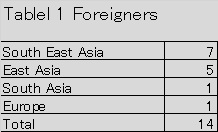
Table 1 shows the nationalities of the bodies managed by our center in 2024. Fourteen participants were foreign nationals from four different regions. Many of them were from Southeast and East Asia.
Judicial autopsies
Judicial autopsies were performed on 361 corpses in 2024. However, two of these were not independent remains, and the details of the remaining 359 are outlined below:
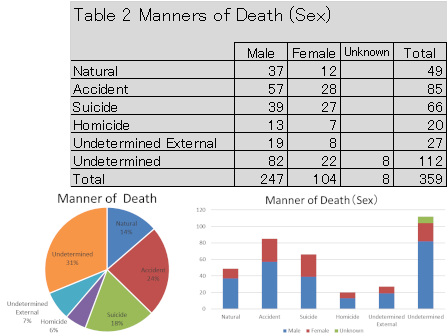
Table 2 shows the manner of death for all corpses managed by our center. We recorded 49 (14%) natural deaths, 85 (24%) accidents, 66 (18%) suicides, 20 (6%) homicides, 27 (7%) deaths associated with undetermined external causes, and 112 (31%) deaths owing to unknown causes. The number of natural and accidental deaths has decreased, while deaths of unknown causes have increased compared to previous years. The death rate was approximately 2.4 times higher in men than in women, and men outnumbered women in all categories of death.
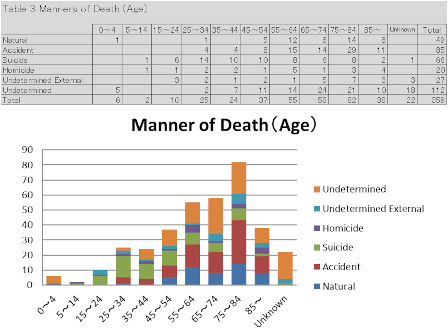
Table 3 shows the age distribution of the corpses managed at our center. The mean and median ages were 59 and 66 years, respectively, showing little difference from the previous years. The mean ages based on the cause of death were 46, 54, 65, and 65 years for suicide, homicide, natural death, and accidental death, respectively.
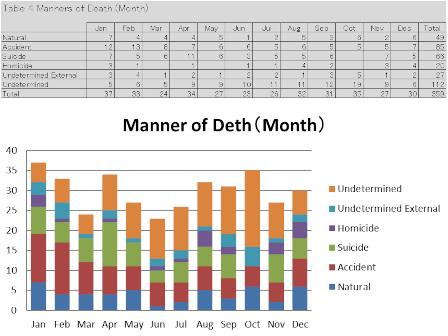
Table 4 shows the monthly distribution of deaths based on type and number of deaths. Although the number was slightly higher in January, no significant difference was observed.
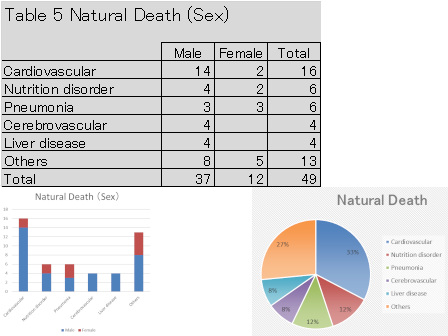
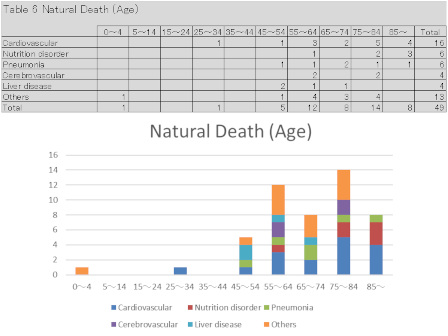
Tables 5 and 6 show the causes of natural deaths. Although the number of deaths was too low to draw definitive conclusions, the causes of natural deaths were similar to those that contributed to the overall mortality statistics of the population (heart disease, malignancy, pneumonia, and cerebrovascular disease). However, it is noteworthy that "other nutritional diseases" ranked high. This is due to malnutrition and dehydration, which have been increasing in recent years among people living alone or in households where elderly individuals care for each other. People aged 65 years and over account for approximately 60% of the population.
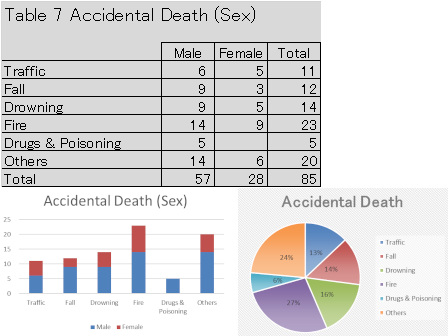
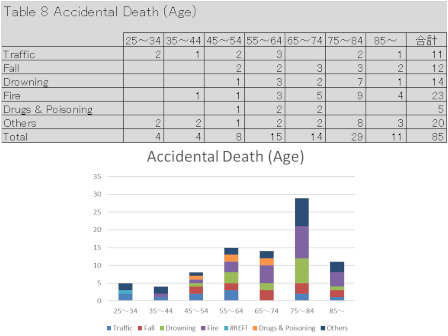
Tables 7 and 8 list the causes of accidental deaths. In 2024, fires remained the leading cause of accidental death, followed by other accidental deaths, drownings, and falls. Many other accidental deaths were attributed to heat stroke, hypothermia, work-related incidents that did not meet the criteria for a specific category, or medical accidents. Traffic accidents have been decreasing over the long term, in line with national trends; however, serious incidents are still observed this year. By age group, the median age in fire incidents was 78 years, and the impact of delayed evacuation among elderly people was notable. Furthermore, the median age of those who drowned was 75 years, which is quite high.
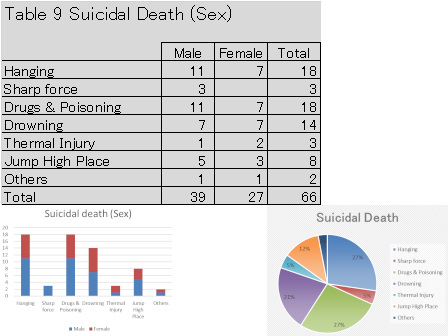
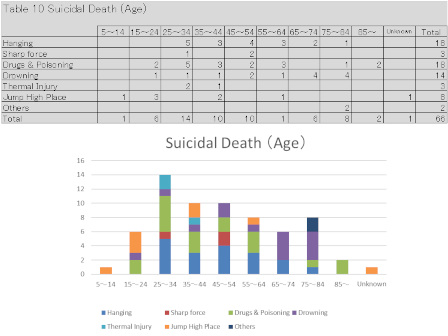
Tables 9 and 10 list suicide methods. Although the most common means of suicide was hanging, in 2024, the number of drugs and poisoning were the same, with 13 of 18 cases of carbon monoxide poisoning using charcoal briquettes. This is followed by drowning and jumping. In terms of sex distribution, men comprised the majority in Chiba Prefecture. Age-wise, the deceased ranged widely, from teenagers to people in their 80s, and in 2024, there were many cases involving young and middle-aged individuals.
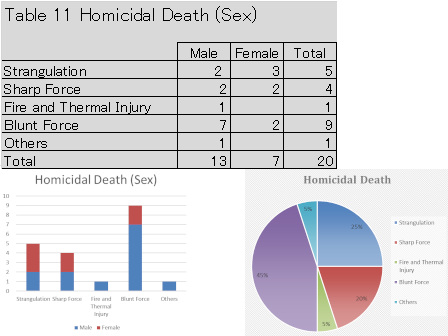
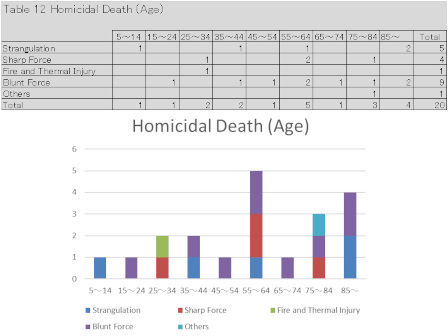
Tables 11 and 12 list the homicidal deaths recorded in 2024 and the methods used, respectively. In 2023, the number of homicide cases dropped significantly; however, this year, the number, 20 cases, returned to that of the previous year. Blunt force was the most common means of homicide, and the number of male victims exceeded that of female victims. Although the victims’ ages varied widely, 65% were 55 years or older.
Among the 27 deaths due to undetermined external causes, 9 were attributed to drowning. Although the direct cause of death can be determined, the manner of death (accident, suicide, or homicide) remains unknown. In particular, in drowning cases, it is often unclear whether death was the result of suicide or an accident.
This year, a relatively large number of undetermined deaths occurred. In addition, 93 of the 112 bodies were difficult to identify because they were skeletal, adipocere, mummified, or severely decomposed. In the remaining cases, the internal or external causes were unknown. Some skeletal remains were suspected to be suicides based on their circumstances. Furthermore, among the undetermined deaths, there were two cases involving infant remains and two cases in which only the pelvis was examined.
Autopsies performed in compliance with the Investigation Act (Investigative autopsies)
The number of investigative autopsies increased significantly from 17 in 2023 to 70. This is thought to be because, under the policy of the National Police Agency, cases that would previously have been subjected to judicial autopsies are now conducted as investigative autopsies.
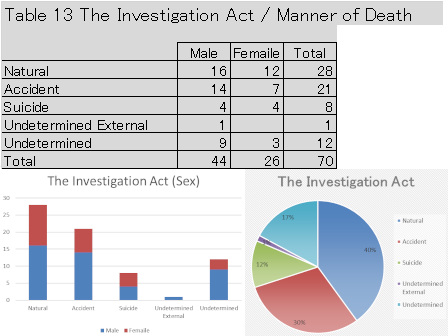
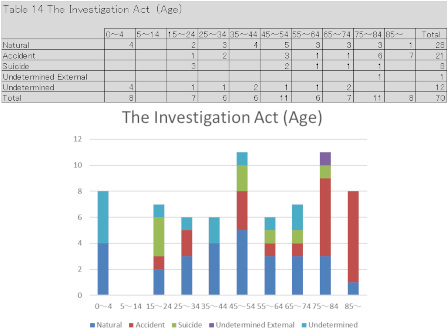
Tables 13 and 14 show the manner of death and age distribution of the bodies. Judicial autopsies accounted for 14% of deaths from natural causes, whereas investigative autopsies accounted for 40%. The types of illnesses were similar to those in judicial autopsies. Similar to the judicial autopsies, most deaths were male. The average age of those who underwent judicial autopsies was 59 years, while that of those who underwent investigative autopsies was 49 years old. There have been many cases involving relatively young people, including deaths of children.
Child deaths
In 2024, autopsies were performed on 20 children (aged <18 years) and infants. Among these, 12 autopsies were judicial and eight were under the Investigation Act; five deaths were attributed to natural causes, three to suicide, one to homicide, two to undetermined external causes, and nine to an unknown cause. Two of the suicides involved a man and a woman jumping from a height, one involved murder by the mother followed by suicide, and two cases of undetermined external causes were both due to drug poisoning; however, it was not possible to determine whether they were accidental or suicidal. Of the undetermined deaths, seven were sudden infant deaths suspected to be caused by nasal obstruction or sudden infant death syndrome, and two were newborns who may have been dropped or abandoned after birth.
Forensic toxicology
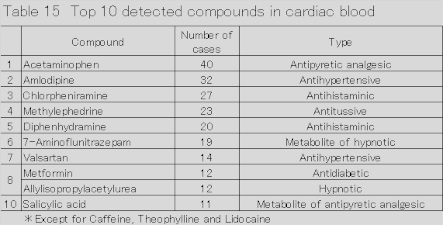
In addition to the simple tests conducted on all bodies from which samples could be collected, drug toxicology tests using mass spectrometry (GC/MS, LC/MS/MS, and LC/QTOF-MS) were also performed, with qualitative and quantitative analyses conducted when necessary. Based on this cooperation agreement, we have been conducting drug and toxicology tests associated with autopsies performed at the University of Tokyo. Primary drugs detected at Chiba University in 2024 are listed in Table 15. Although the stimulant methamphetamine was not among the top ten, it was detected in six cases, ranking 21st overall.
Chiba CDR
Every year, we hold the Chiba Child Death Review (CCDR), where experts in Chiba Prefecture?including pediatricians, government officials, and members of the judiciary?share information on child death cases and discuss ways to prevent their recurrence. On March 15, 2024, the 17th meeting was hosted by the School of Medicine at Chiba University. At this meeting, two cases of developmental disorders were discussed to help prevent their recurrence, followed by an educational lecture on "developmental disorders." Many people participated in this study group, including doctors and researchers in forensic medicine, pediatrics, and psychiatry, as well as representatives from the Chiba District Public Prosecutors Office, Chiba Prefectural Police, and government agencies.
Disaster victim identification training
The 6th Chiba Large-Scale Disaster Victim Identification (DVI) drill was held at the International University of Health and Welfare in 2024. Assuming an earthquake and tsunami scenario, the training was conducted in collaboration with the Department of Forensic Medicine at the International University of Health and Welfare and was co-hosted by the Chiba Medical Association and Chiba Dental Association. The training involved the Chiba Prefectural Police, the Chiba Prefecture Disaster Prevention and Crisis Management Department, neighboring municipalities, and the Chiba Coast Guard, and included a tabletop exercise using mannequins to confirm autopsy and identification procedures during a disaster.

